The South Shore Nature Sanctuary is made up of diverse ecosystems native to our midwest landscape. Learn more about the variety of ecosystems and the many native plants and animals found in each ecosystem below.
Curious about what you are finding when you visit the Sanctuary? We recommend downloading iNaturalist (also available as "Seek") in the App Store to identify plants and animals by photo. You can also download Merlin in the App Store to identify birds from their calls and find images of birds native to the area. When you use these apps, the data is used to track wildlife and enrich our understanding of the many species that make the Sanctuary their home!
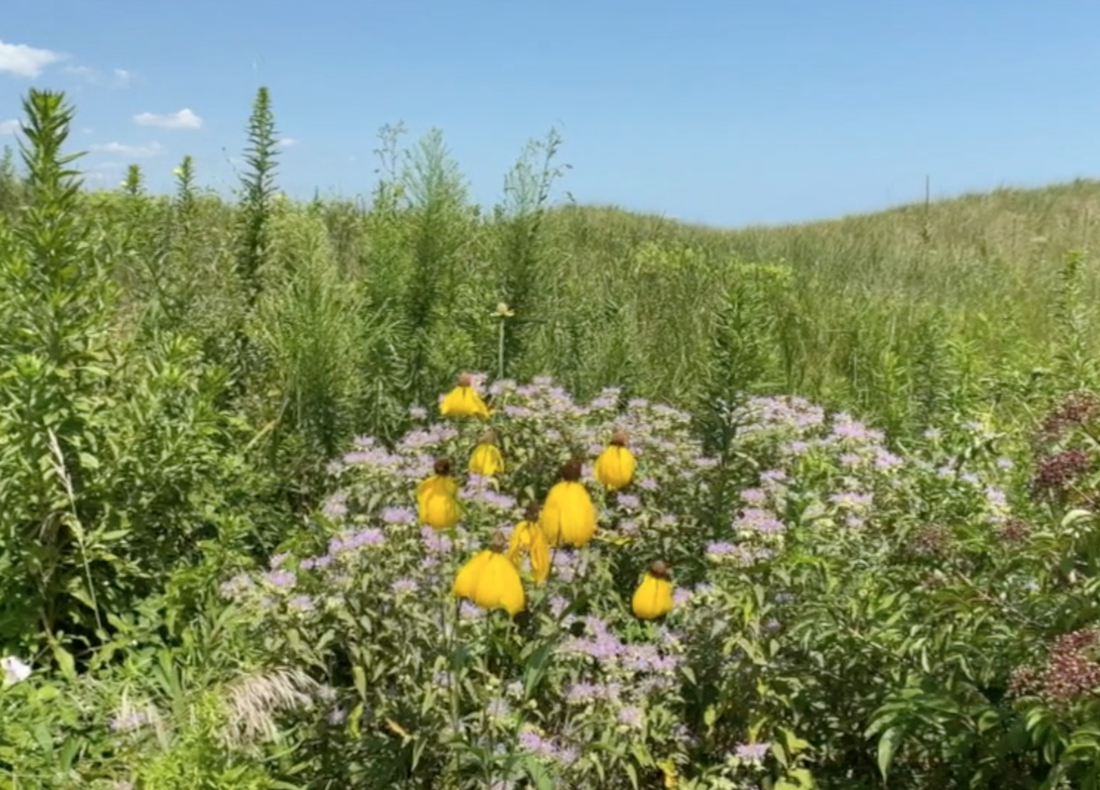
Illinois is known as the Prairie State because it was once covered in millions of acres of ecosystems just like this one, characterized by towering native grasses and a stunning selection of wildflowers. South Shore’s prairie gives an opportunity to imagine what much of our state looked like before the 20th century. This ecosystem also provides precious food and nesting space to many species of migratory birds and butterflies, including Monarchs. Pollinators are attracted to the many native wildflowers, including Wild Bergamot (aka Bee Balm), Milkweed, tall yellow Compass Plants, Purple Coneflower (Echinacea), spiky Rattlesnake Master, and the rare, scarlet-colored Royal Catchfly, to name only a few.
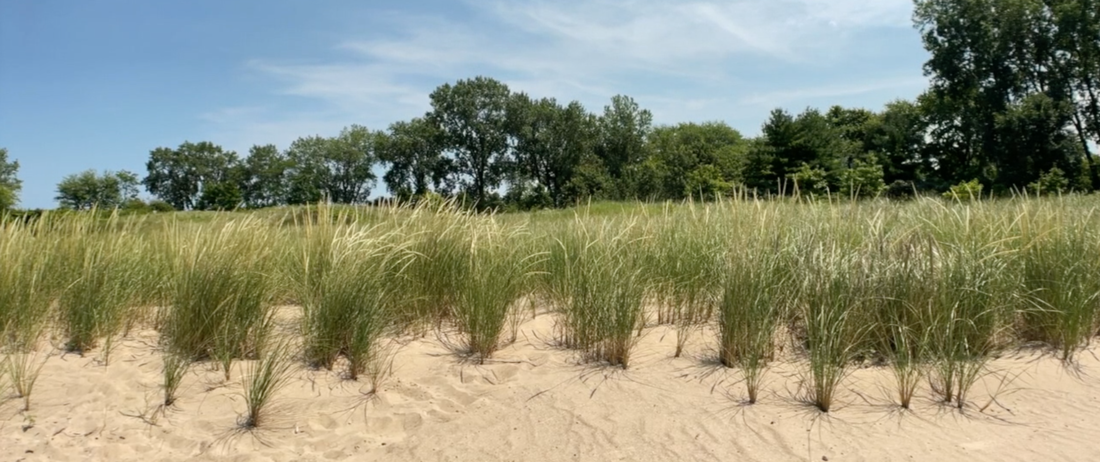
Dunes are mounds or ridges of sand formed and moved by wind, and are an important part of many native ecosystems around the shores of Lake Michigan, including the famous Indiana Dunes. But we also have them right here in South Shore! The towering Marram Grass on the dunes sends roots up to 6 feet underground to give the dune stability. South Shore’s dunes are also home to native Prickly Pear Cactus and a rare and endangered wildflower called Large Beardtongue, among many others.
Marshes are a type of wetland characterized by flooded soil where plant life is dominated by grasses. The slow-moving water in a marsh creates a unique ecosystem of plants, animals, and microbes able to thrive in a saturated environment. South Shore’s marsh is host to various species of water birds, including Mallard Ducks and various Herons, as well as American Toads. Native flowering water plants in the lagoon include Swamp Rose Mallow, Pickerel Weed, Blue Flag Iris, and White Waterlilies.
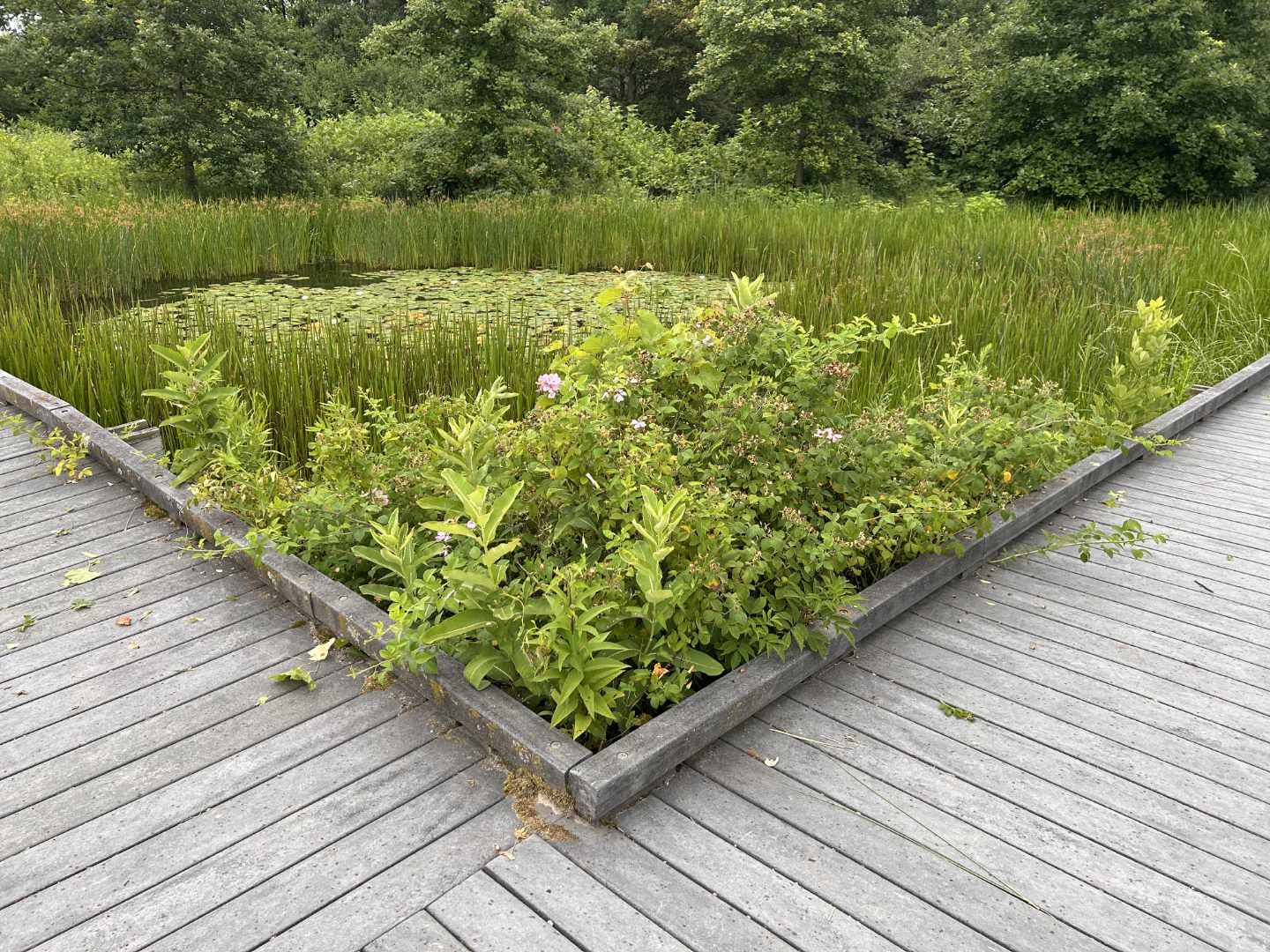
Shrubs are woody plants that are smaller than trees, generally under about 15-20 feet tall. Shrubland ecosystems are diverse collections of these types of plants. South Shore’s shoreline shrubland includes native species like Witch Hazel, Ninebark, Blackhaw, Wild Currant, and native Rose Bushes. The trees along the shoreline here are great for birdwatching, as they provide habitat for many kinds of migrating and shore birds. Dead trees are selectively preserved in natural areas as long as they aren’t a hazard to visitors because of their value as habitats.
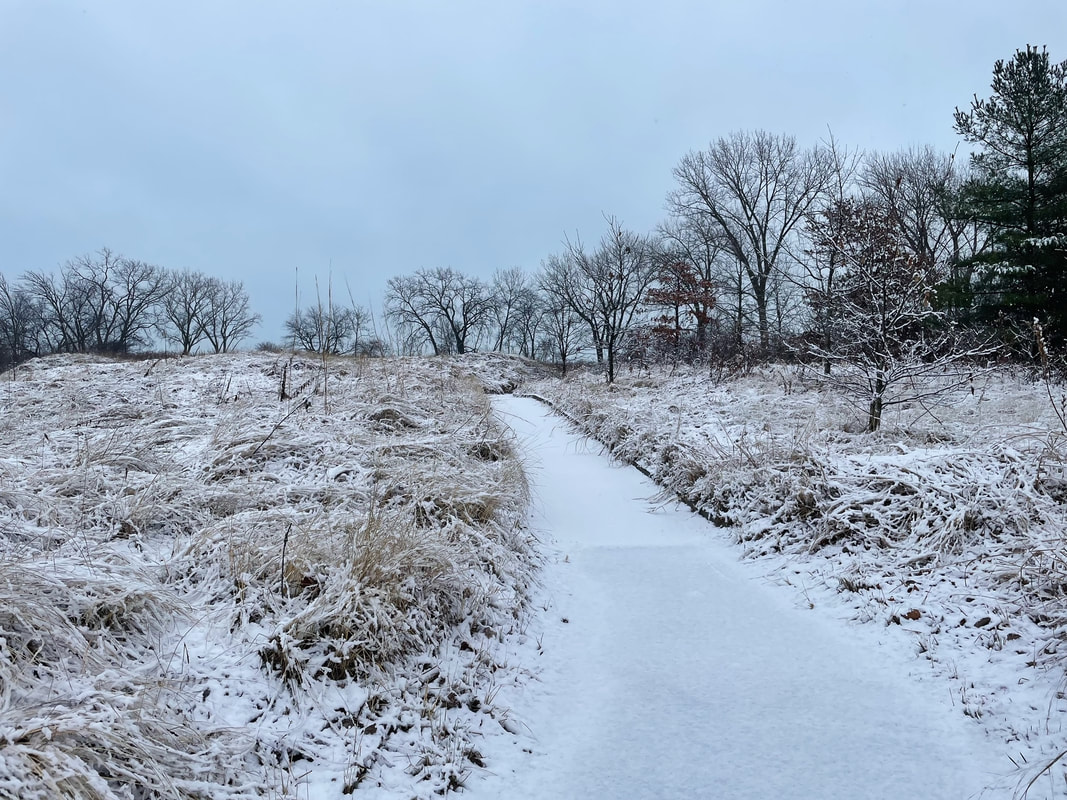
The savanna ecosystem is defined by a scattered tree cover that allows sunlight through to tall grasses growing on the ground below. There used to be millions of acres of Black Oak Savanna from Michigan to Nebraska, but there are now only a few areas of it remaining, many of them in the Indiana Dunes National Park. Native Oak Trees were planted here when the Sanctuary was first established in the early 2000s. Over decades these trees will grow much larger in order to create the open tree canopy that characterizes the savanna ecosystem, and provide South Shore with a special example of this uniquely midwestern native ecosystem.
South Shore’s woodland area is a quiet respite for human visitors, birds, animals, and plants. The year-round canopy created by the stand of White Pine Trees provides a forest floor perfect for shade-adapted plants like Virginia Bluebells and American Elderberries. The pine trees also supply nesting habitat for larger birds, like Herons, native bats such as Big Brown Bats and Hoary Bats, and more.